সাংহাই শেনহুয়া কেবেল (গোষ্ঠী) কোং লিমিটেড।
A budget cable is not a bad cable, but a cable that has been made cheaper than the specification allows is a hazard. The difference between the two is whether the saving comes from process, packaging or logistics, or from copper and compound. Buyers operating in price sensitive markets need a way to reach an economical product without losing the properties that keep an installation safe. This guide explains where legitimate savings exist, where the risky ones hide, how to write a specification that allows the first and blocks the second, and how to compare two quotes that differ mainly in price. Six answers follow on copper content, compound quality, conductor class and inspection.

The largest legitimate saving is process efficiency. A factory running long continuous lengths on modern lines wastes less compound, uses less energy per metre and has lower scrap rates than one running short batches. A buyer who consolidates orders, accepts standard colours and gives a longer delivery window lets the factory plan properly, and part of that gain can be passed on.
The second saving is packing and logistics. Cable is heavy, and freight is charged on weight and volume. Longer drums reduce the cost per metre because the fixed costs of drum, handling and testing are spread over more cable. Choosing the right drum size for the route, and consolidating shipments to fill a container properly, can reduce landed cost by several percent without touching the product.
The third saving is standardisation. A project that uses twelve sizes and four colours costs more than one that uses eight sizes and two. Fewer variants mean fewer setups, fewer line changes and less risk of a mix-up. This is a design decision with a real price effect, and it is often overlooked because it happens before purchasing becomes involved.
The fourth saving is commercial: payment terms, order volume, annual commitment and a fixed metal basis for a defined period. Each of these reduces the supplier's risk and can be traded for price. They are legitimate because they cost nothing in product quality.
The fifth saving is the aluminium option, where the design allows it. Aluminium has roughly a third of the metal cost of copper per unit of conductivity, and for fixed distribution runs where a larger cross section is acceptable, the total can be lower. The trade-off is termination practice, bending radius and jointing, which must be planned rather than discovered.
| Saving | How it works | Risk |
|---|---|---|
| Process efficiency | Long runs, planned schedule | Low |
| Packing and freight | Longer drums, better container fill | Low |
| Standardisation | Fewer sizes and colours | Low |
| Commercial terms | Volume, payment, fixed basis | Low |
| Aluminium | Cheaper metal, larger section | Medium, needs design review |
| Reduced copper | Below nominal section | High, do not accept |
| Filled compound | More filler, less polymer | High, do not accept |
The classic risky saving is conductor size. A conductor built to the minimum permitted resistance rather than the nominal area passes a voltage test and looks correct, but carries less current and gets hotter. The reduction is typically a few percent of area, enough to matter in a loaded circuit and enough to make the cable cheaper. The defence is to require the measured resistance and to compare it with the standard table.
The second is compound quality. PVC compound cost depends heavily on the ratio of resin to filler, and a compound with more filler is cheaper, stiffer and less resistant to ageing, heat and cold. It may pass a short term test and fail in a hot roof space after three summers. The defence is to specify the compound class, request the sheath and insulation properties, and compare the feel and finish of a sample against a known good product.
The third is dimension. Insulation and sheath thickness at the lower tolerance limit saves compound and process time. Within tolerance it is legal, but a sheath at the minimum offers less mechanical protection, and a thin insulation reduces the safety margin against transient overvoltages. The defence is to require measured dimensions on the certificate and to check a cut sample.
The fourth is length. A drum sold as 100 metres that contains 96 metres is a five percent price advantage that the buyer pays for in wasted installation time. The defence is to check the metre marking against the counter or weigh the drum and compare with the theoretical mass.
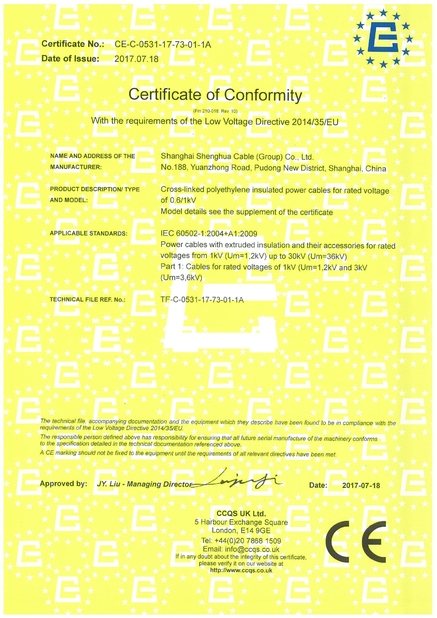
The fifth is certification. A flame retardant or LSZH claim without a test report is free to make and expensive to rely on. The defence is simple: ask for the report, check the standard, check that the sizes are covered.
Start with a specification that separates the essential from the optional. Essential properties are conductor size and material, insulation type and thickness, voltage class, standard and, where relevant, fire performance. Optional properties are sheath colour, drum length beyond the minimum, custom marking and elaborate packaging. Savings should be taken from the optional list, never from the essential one.
Then ask for the quotation in a structure that shows what you are buying: conductor mass per metre, insulation and sheath thickness, outer diameter, drum length, standard, test regime and metal basis. A quote that cannot be broken down this way cannot be compared, and it is usually the one with something to hide.
Use the resistance check as a routine. Ask for the conductor resistance per kilometre on the certificate, and for a repeat order compare it with the previous batch. A jump in resistance is the clearest early warning of a construction change, and it is objective enough to raise without accusation.
Buy the volume you can plan for. A factory gives better terms and better scheduling to a buyer with a forecast than to one with an urgent spot order, and the difference is real. Where volume is uncertain, agree a framework with call-offs rather than a series of small urgent orders.
Inspect the first delivery and every third one after that. Verify the drum length, the print, the dimensions at a cut end and the certificate traceability. Products such as the Temperature Rating -20C To 70C PVC Insulated Cables For Household Needs And White Color Appearance and the Shanghai Shenghua Cable XLPE / PVC Insulated Aerial Bundled Cable , Triplex Service Drop Cable are typical of the economical end of a catalogue, and they can be perfectly sound when the specification is clear and the verification is routine.
Finally, keep a reference sample of a known good economical product and one of a premium product. Comparing a new delivery against both tells you quickly which side of the line it sits on, and it makes the conversation with the supplier factual rather than a matter of opinion.
The price per metre is the number everyone negotiates and the one that matters least in isolation. The cost that reaches the balance sheet includes freight, duties, handling, installation time, failure risk and the cost of replacement if the cable does not perform. A cheaper cable that is harder to pull, or that fails in service, can cost several times its apparent saving.
A simple total cost model, built once and reused, changes the conversation. It should include the landed price per metre, the installation cost per metre, an allowance for scrap and rework, and a risk allowance based on the criticality of the circuit. With those numbers, a premium product often wins on large or critical installations, and the economical product wins on long runs of low criticality, which is exactly the outcome a rational buyer wants.
In markets where price competition is intense, specifications tend to be reduced to a minimum and then reduced again. The discipline that protects the buyer is to define the non negotiable properties clearly and to be flexible everywhere else. Conductor size, insulation type, voltage class and where relevant fire performance are non negotiable; packaging, marking, delivery schedule and payment terms are negotiable.
Writing that boundary into the request for quotation removes the ambiguity that invites a supplier to offer something cheaper than asked. It also gives the buyer a defensible position when a lower offer arrives, because the comparison can be made line by line rather than on the headline figure alone.
The costs of a poor cable purchase arrive in a predictable sequence. First the installation is slower because the cable is stiff or the drum length is short. Then a test fails and a circuit is reworked. Then, months later, a termination overheats or insulation resistance falls and the circuit is investigated. Each stage costs more than the previous one, and the original saving looks small by comparison.
Buyers who track total cost per installed metre, rather than price per metre, usually find that the apparently expensive supplier is cheaper overall. The data needed is modest: invoice price, installation hours, rework hours and failure incidents, recorded per project. After three projects the pattern is visible, and the purchasing decision becomes evidence based rather than habitual.
None of this argues against economical products. It argues for buying them where the consequences of a marginal product are small and the volume is large, and for buying verified quality where the consequences are severe. That differentiation, applied deliberately, is what separates a procurement function from a purchasing clerk.
A supplier who understands that the buyer's target is a landed cost, not a unit price, can usually find savings the buyer cannot see: a longer production run, a combined shipment, a standard colour instead of a special one, a drum size that fills the container better. Those conversations go better when the buyer shares the target and the constraints rather than simply asking for a discount. The result is often a lower total cost with no change to the product, which is the only outcome worth pursuing in a commodity market.
None of these compromise the technical specification, and together they typically produce a better result than a series of price reductions negotiated item by item.
No. Savings from process, packing, standardisation and commercial terms are legitimate. Savings from copper, compound or length are not.
Ask for the measured conductor resistance per kilometre and compare with the standard maximum. A shortfall in area shows up as higher resistance.
It is cheaper and stiffer, and it ages faster under heat and cold. It may pass a short test and fail in service.
It is legal within tolerance but leaves less mechanical and electrical margin. Specify nominal thickness for critical runs.
Compare the length marking with the counter at delivery, or weigh the drum and compare with the theoretical mass for the size.
Yes for fixed distribution where a larger section and appropriate terminations are acceptable. It needs a design review, not a substitution.
Economical cable buying is a discipline of taking savings from the right places. Consolidate orders, standardise variants, choose sensible drums and negotiate commercial terms, while holding the conductor, compound and dimensions fixed and verifiable. Ask for a broken-down quotation, check resistance on every batch, and inspect against a reference sample. Shanghai Shenghua Cable Group quotes PVC insulated cable with the conductor mass, dimensions, standard and test regime stated per item, so that an economical offer can be compared line by line rather than by headline price. Send your budget target and specification through our contact page and we will propose a compliant option with the savings identified. Related products include the VGV 3x1.5mm2 IP65 PVC Insulated Cable Marine Industrial 450/750V IEC60228 Copper, the NYY-O 1x300mm2 Oxygen-Free Copper PVC Insulated Single Core Power Cable 0.6/1kV Distribution, the Shanghai Shenghua Power Cable Professional Control Flexible Wire Cable Eco Friendly CE KEMA Certification, the 0.6kv / 1kv Xlpe Insulated Power Cable Pvc Sheath Iec60502 Bs7870 Standard, the BS5467 Cu/XLPE/PVC/AWA/PVC 0.6/1kV XLPE Insulated Power Cable for Fixed Installation and the VGV 3x2.5mm2 Rigid Oxygen-Free Copper PVC Insulated Sheathed Electrical Wire 1kV Industrial.