সাংহাই শেনহুয়া কেবেল (গোষ্ঠী) কোং লিমিটেড।
The PVC insulated cable price is dominated by one number, the copper content, and that single fact explains most of the difference between quotations that look inexplicably far apart. A cable is priced as metal plus compound plus processing plus packing plus freight, and each element moves for a different reason. This guide breaks down the cost structure, explains how metal basis quotations work and why two offers of the same cable are often not comparable, lists the specific ways a low price is achieved at the buyer's expense, and shows how to build a comparison sheet that makes competing offers genuinely comparable. It ends with six answers on copper weight, drum length, payment terms and the warning signs of a quote that is too cheap.

A PVC insulated power cable is a stack of materials and processes, and the cost of each is driven by a different market. Understanding the split is what allows a buyer to judge whether a price movement is genuine or an opportunity.
| Element | Share of price | Main driver |
|---|---|---|
| Copper conductor | 60-80 percent | Metal exchange, premium |
| PVC compound | 4-8 percent | Resin and plasticiser |
| Armour or screen | 5-15 percent | Steel and copper prices |
| Processing | 10-20 percent | Labour, energy, capacity |
| Packing and freight | 2-10 percent | Weight, distance, drum type |
Because copper dominates, a 20 percent movement in the copper price changes the cable price by 12 to 16 percent, while a 20 percent movement in PVC compound changes it by less than 2 percent. Buyers who focus negotiation on processing or packing are therefore arguing about a small part of the number, while the metal basis, the conductor size actually delivered and the drum length determine most of the difference between offers.
Two quotations for what appears to be the same cable can differ by 25 percent without either supplier being dishonest. The difference almost always lies in one of five places.
1. Metal basis and premium. Copper is priced as an exchange quotation plus a premium. One offer may fix the basis for seven days, another may float it for thirty, and a third may use a different exchange reference entirely. Comparing the headline numbers of a fixed and a floating quotation is comparing two different financial products.
2. Conductor content. A cable built with the nominal cross section has more copper than one built to the minimum permitted resistance. Both may pass a voltage test. Only the measured conductor resistance and the metal mass per metre reveal the difference, and that difference is often several percent of the price.
3. Sheath and insulation thickness. A cable with insulation and sheath at the minimum permitted thickness uses less compound and less process time than one with generous thickness. The saving is small per metre and significant per kilometre, and it reduces mechanical protection and service life.
4. Drum length and packing. A 1000 metre drum is cheaper per metre than a 500 metre drum of the same cable, because the fixed costs of drum, handling and testing are spread over more material. Comparing prices per metre without comparing drum length is a classic error.
5. Certified versus declared performance. A flame retardant or LSZH construction with type test reports costs more than one that carries the description without documentation. In a fire, the difference is the whole point of the specification.
6. Payment and delivery terms. A price with 30 day payment terms and CIF delivery is not the same as a price with advance payment and ex-works terms, even when the numbers look close.
Create a comparison sheet with a column per supplier and a fixed row set. The rows should include: cable designation and voltage class, cross section and core count, conductor material and class, measured conductor resistance per kilometre, metal mass per metre, insulation and sheath type and nominal thickness, standard reference, flame or LSZH certification status, drum length, packing type, metal basis with date and validity, delivery term, payment term, and validity of the offer. With those rows filled, the cheapest column is obvious and so is the reason.
Ask for the copper weight. A quotation that states the mass of copper per metre allows an immediate cross check against the metal price, and it exposes a shortfall faster than any inspection. Suppliers who know their copper content rarely object, and a supplier who cannot state it is telling you something useful.
Fix the metal basis in writing for the period you need. If approval will take three weeks, a fixed basis has real value and should be priced rather than assumed. If the order will be placed within days, a floating basis may be cheaper. Either way, state the mechanism in the purchase order so that the invoice cannot drift.
Compare at the same drum length and the same delivery term. Where drum length differs, normalise to price per metre with the drum cost included. Where delivery terms differ, add the freight to the ex-works price before comparing. These two normalisations alone often reorder a shortlist.
Then verify rather than assume. Request a short sample for a new supplier, check the sheath print and the measured diameter, and retain a sample per batch. For a repeat order, compare the new drum against the retained sample from the previous delivery: a change in diameter or in sheath appearance is the earliest sign of a silent specification change.
| Comparison row | Why it matters |
|---|---|
| Designation and voltage | Confirms the same product family |
| Conductor resistance | Reveals cross section shortfall |
| Copper mass per metre | Cross check against metal price |
| Insulation and sheath thickness | Indicates compound content and life |
| Standard and certification | Confirms declared performance |
| Drum length and packing | Normalises price per metre |
| Metal basis and validity | Makes the offer comparable |
| Delivery and payment terms | Adjusts the true landed cost |
Typical PVC cable items that appear in these comparisons include the NYY 4x25mm2 copper PVC cable 0.6/1 kV, the UL standard 500 metre PVC insulated multi-core cable, and the steel wire armoured PVC cable coiled for underground use. Distribution buyers often compare the CYKY 5x10mm2 underground cable with the N2XRY 4x35mm2 armoured cable, while building projects compare the BVR 1x4mm2 building wire in coil form. Larger projects also benchmark against the unarmoured PVC control cable and the double PVC jacket 7x26 cable where extra mechanical protection is specified.
When a quotation is materially below the arithmetic of copper plus compound plus processing, the saving has to come from somewhere. Five sources are common. The conductor may be built below nominal cross section, with resistance just inside the permitted maximum. The insulation and sheath may be at the minimum thickness with little margin. The compound may contain more filler and less polymer, which reduces cost and mechanical strength. The drum may be short, with the nominal length measured loosely. Or the certification may be declared rather than tested, which costs nothing at the factory and everything at the fire.
None of these is always detectable from a price, which is why verification matters. A new supplier should be asked for measured resistance, metal mass, dimension data and a sample. A repeat supplier should be checked at intervals, because specifications drift quietly when a commodity price rises. The most effective single check remains the retained sample from each batch, compared against the approved reference: a diameter change or a sheath that looks glossier than before is usually the visible sign of a compound or thickness change.
There are legitimate ways to reduce the landed cost, and buyers who use them avoid the pressure that leads suppliers to cut corners. Increasing the drum length spreads fixed costs. Consolidating several cable types into one order improves factory scheduling. Accepting a standard sheath colour instead of a custom shade removes a minimum order quantity. Planning delivery outside peak season improves freight rates. Fixing the metal basis at the right moment can be worth more than a percentage point on processing.
By contrast, pressing the processing margin on a commodity product with a 60 to 80 percent metal content produces one of two outcomes: the supplier declines, or the supplier accepts and finds the difference somewhere in the construction. Buyers who understand the cost split negotiate on the variables that genuinely move the number, and they protect the specification while doing it.
For export orders the cable price is only part of the landed cost. A drum of PVC cable is heavy, and the freight is charged on weight and volume, so a marginal change in sheath diameter or drum size has a real effect on transport. Two suppliers quoting the same price ex-works can deliver at different landed costs if one uses a longer drum that fits a container more efficiently, or if one packs coils rather than drums for smaller sizes. Buyers should ask for the drum dimensions, the gross weight and the packing method, and calculate the container utilisation before deciding which offer is cheapest at the destination.
Drum return is another variable that is often ignored. Wooden drums may be returnable, disposable or chargeable, and the difference on a large order can be significant. For small sizes, coils eliminate drum cost entirely but need handling care. Specifying the packing explicitly, rather than accepting a default, is a straightforward saving that requires no negotiation on the cable itself and no compromise on the specification.
Payment terms are part of the price. An offer with 30 days credit, an offer with a letter of credit and an offer with advance payment carry different financing and risk costs, and comparing only the headline figure ignores them. Equally, price validity matters in a market where the metal moves daily: an offer valid for seven days is worth more than one valid for sixty if the order will be placed quickly, and worth less if approvals will take a month.
The practical approach is to state both in the purchase order: the metal basis with its validity and the payment schedule with its milestones. A supplier who is asked to hold a price for longer than the market allows will either decline or build a risk margin into the number, and both outcomes are worse for the buyer than a transparent mechanism that adjusts with the exchange and is agreed in advance.
Usually because of metal basis and validity, actual conductor content, insulation and sheath thickness, drum length or delivery terms. Normalise all five before comparing.
No. A price below the metal value of the copper plus processing is a warning, not a bargain. Check conductor resistance, dimensions and certification before accepting it.
A price structure that links the cable price to an exchange copper quotation, plus a fixed premium and processing charge. The basis reference and validity must be stated.
Yes, because drum, handling, testing and freight fixed costs are spread over more cable. Compare prices at the same drum length.
Ask for the measured conductor resistance per kilometre and the copper mass per metre, and compare against the standard maximum for that class and size.
Only if it meets the specified standard and ageing performance. Recycled or heavily filled compounds reduce mechanical strength and service life, and they are a common route to a low price.
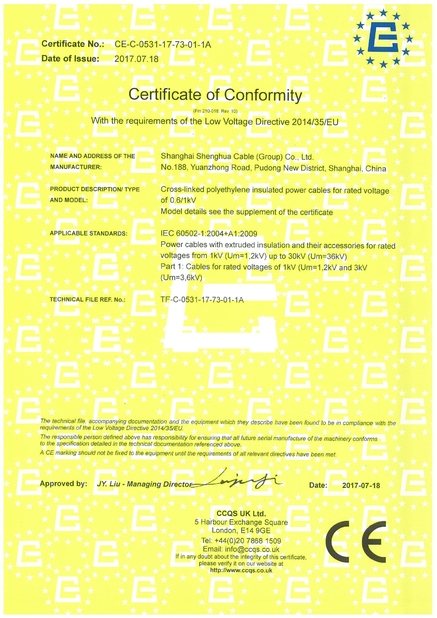
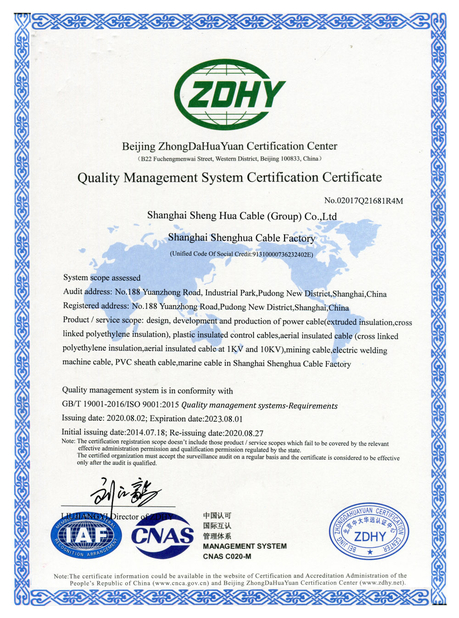
The PVC insulated cable price is mostly copper, so procurement should focus on metal basis, conductor content, dimensions, drum length and terms rather than on squeezing the processing margin. Build a comparison sheet with fixed rows, ask for copper mass and resistance, normalise the commercial terms, and retain a sample of every batch. That approach turns a price negotiation into an engineering comparison, which is where the real savings are. Shanghai Shenghua Cable Group quotes PVC insulated power, control and building cable with a stated metal basis, copper mass and measured resistance for each item, and confirms drum length and packing before shipment. Send your bill of quantities through our contact page and our engineers will return a fully comparable quotation with the technical data attached.